More on this Dutton book,
Policing Chinese Politics...
I am drawn to a comment by Dutton in the newspaper article linked in the previous post. It is about commitment politics or what he calls, elsewhere, passion politics. It describes, as the newspaper gloss puts it, those moments when "people were drawn to a cause that took on, for them, a great moral importance, over-riding all other considerations." For Dutton, it's crucial. "It is really that alien type of politics ," he says, "that liberal democracy doesn't understand but needs to take into account." This is to continue the point made at the end of the previous post -- the distinction between system and lifeworld, what happens when the two collide and merge and behave in ways outside of the liberal democratic frame.

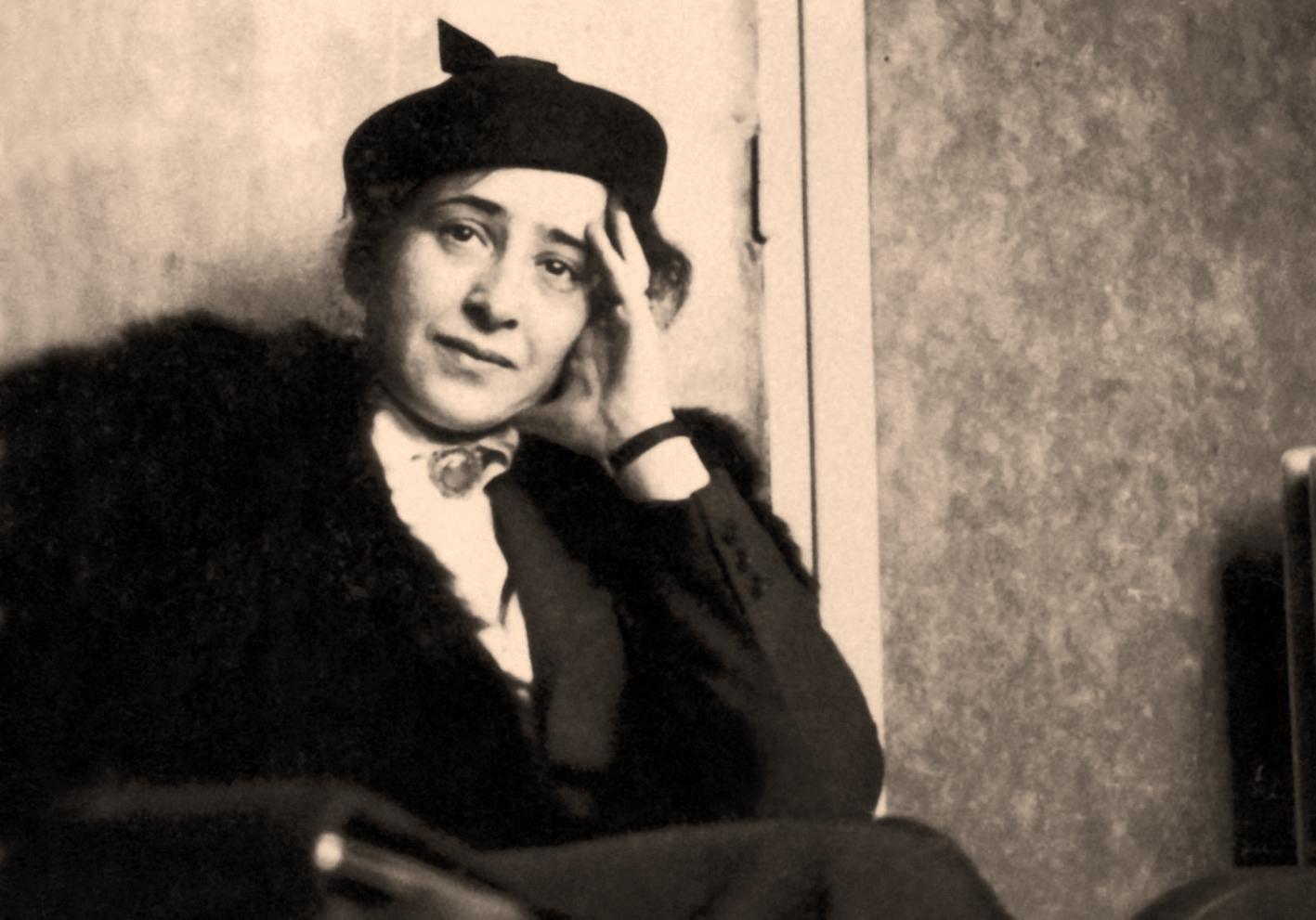
In regard to this topic within the book, Dutton speaks first of Hannah Arendt. She "writes of politics as something that speaks to the very heart of the human condition." (p9) Arendt's understanding of politics is one which values action shared with others. The condition of the political is action "based upon a recognition of plurality" but one that distinguishes "between life, instrumental control and freedom." So it is striving for freedom, individual identity and plurality that are the ground of politics. When other categories like life and instrumental action are placed in political categories, in Arendt's theorisation, considerable costs are exacted. Politics, then, is a contained thing. When it becomes a question not of
freedom but
compassion, "it starts to raise the specter of terror". (p9)
But, this for Dutton, stops too short.
It is only when 'the political' oversteps the mark in this way and 'colonises' other domains, that one comes to see clearly the types of intensities that would drive one to act beyond oneself in the name of a cause. That is to say, it is only at those moments of intensity that one comes to see the political clearly.... Indeed, I would argue that politics is not about freedom per se, but about the production of a particular set of desires and intense feelings based upon the commitment to a cause. To speak 'in the name of' something suspends one's own egocentric desires but, simultaneously, leads one to cast aside own's own moral bearing for the pursuit of a greater good. To fight 'in the name of...(the political)' is to produce and release a series of non-agonal intensities. These are not necessarily reducible to a striving for freedom but they do entail commitments to action that sometimes speak in freedom's name. Only by rephrasing Arendt in this way do we come to capture something of the human condition that is political. And while this may only constitute a minor linguistic modification, it proves a significant theoretical one. (p9-10)
We come then to a question of
commitment, a point of focus that extends from Arendt. The actions carried out under this sign can vary. "Hence, a striving for commitment entails recognition of the fact that one strives for a multitude of freedoms (freedom from economic want, from chaos, from oppression) and while this leads one many miles from Arendt's position, it has the virtue of highlighting the centrality of passion and intensity in any political expression." (p10) This commitment -- these passions and intensities -- are what draw us toward the distinction of friend and enemy. And so we come to Schmitt, Hitler's "crown jurist." Mao's comment ("Who are our enemies, who are our friends? That is the question germane to the revolution.") has the effect of laying bare the "policing of the political," for Dutton. He nicely terms this the "Chinese passion play of policing." (p11) The book, in moving from these opening theoretical meditations to the empirical and historical narrative, is a study of these abstractions via a concretisation of the friend/enemy distinction in everyday life. "It tells of a social life in which friend and enemy moved from being a state of mind to a station of nation." The book, then, is one in which the author has "almost entirely focused upon expression of, responses to, attempts to place limits upon, and techniques to promote...this friend/enemy dichotomy." Where it is to end up, having told its history of the revolutionary era's friend/enemy dichotomy, is the post-revolutionary reform-era. He is strident here. "I want to show how the Chinese reform-era state has successfully eaten away at the marrow of these old-style political commitments, and, through this, learn something of the way it has tamed, if perhaps only temporarily, the beast that is politics."
There is a potential commentary to be offered here on recent protests in China, particularly surrounding the Olympics juggernaut. The return of the repressed (beast)?

More interesting for my project, though, is the question of the subject's interpellation. For Dutton, it is one produced by policing procedures and directives: a new recruit learns the orthodox history of the force and its role in the society etc. For Soviet and Eastern European subjects, it is one no less structured by the role of the police, of being inside/outside the 'correctly' conceived politics. The Stasi, of course, are front-and-centre of many accounts of the GDR. This focus, not least in the vapourtrail of
The Lives of Others, has been criticised for good reason -- eclipsing and overvaluing the role of this organ. But Dutton makes a good point about policing the borders of the political, about what is acceptable (friendly) and unacceptable (enemy). This ought to take us from the mere question of the secret police -- with its tantalising and melodramatic smell of espionage and spying and power plays -- to the conception of politics and the legitimation of a certain order. This then concertinas out to considerations of the subject's (non-)commitment to an alternative politics and should, with any hope, land me somewhere in the region of my topic.